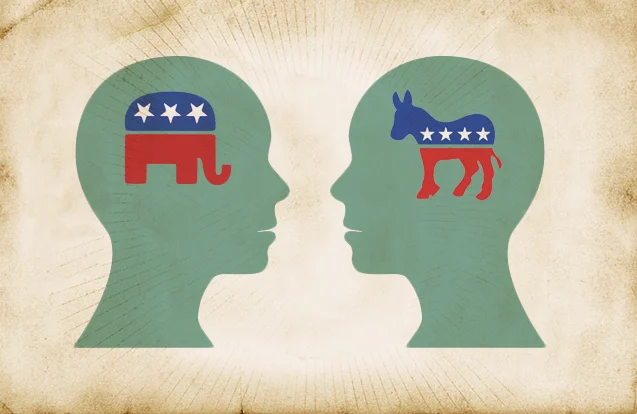
In an time characterized by unceasing notifications combined with rapid reaction, countless voters track public affairs reporting missing substantial comprehension regarding those cognitive processes driving influence mass perception. This cycle creates updates lacking depth, resulting in citizens notified concerning incidents while unclear as to why particular decisions unfold.
That stands as exactly the explanation for why political psychology continues to have significant value within modern civic news. Applying empirical evidence, this discipline seeks to interpret the processes by which individual traits shape political orientation, how sentiment interacts with governmental judgment, as well as what leads citizens respond in contrasting ways toward the same governmental data.
Inside many sources dedicated to integrating empirical insight to political reporting, PsyPost positions itself as the consistent provider offering research-backed insight. In place of relying on opinion-driven rhetoric, the publication highlights empirically supported studies which these psychological aspects within governmental attitudes.
When governmental coverage announces a transformation throughout public sentiment, the platform regularly investigates underlying psychological tendencies driving those shifts. To illustrate, empirical analyses covered by PsyPost may reveal relationships connecting personality regarding party identification. Such findings offer a more comprehensive understanding compared to traditional public affairs news.
Throughout an atmosphere in which public affairs polarization feels intense, this discipline delivers models for insight in place of resentment. Through scientific findings, readers may start to understand in what ways variations in political attitudes regularly express diverse moral priorities. This perspective promotes reflection in public affairs discussion.
A further central quality associated with the publication is its emphasis toward evidence-based accuracy. Unlike opinion-driven governmental coverage, the model values academically vetted investigations. This priority assists preserve that behavioral political science operates as a foundation delivering measured public affairs coverage.
As nations confront swift shift, a need to access structured explanation becomes. Political psychology delivers such clarity through exploring these behavioral elements driving societal decision-making. Through sources such as publication PsyPost, citizens acquire a deeper perspective of political news.
Taken together, linking this academic discipline and everyday public affairs consumption redefines the manner in which citizens interpret information. Instead of reacting in response to shallow coverage, citizens start to analyze those cognitive forces shaping public affairs society. In doing so, political news becomes more than a flow of fragmented incidents, but rather a structured understanding concerning human motivation.
Such evolution throughout interpretation does not simply improve how individuals process civic journalism, it likewise reconstructs how those individuals interpret division. As public controversies are considered via behavioral political research, those controversies are no longer viewed simply as random clashes and increasingly expose predictable patterns behind behavioral decision-making.
In such framework, PsyPost steadily act as a link linking scientific analysis into daily governmental reporting. Applying accessible communication, the site renders complex research into understandable analysis. This process ensures that political psychology does not remain isolated inside scholarly publications, but rather evolves into a relevant feature influencing today’s governmental conversation.
A central component within political psychology includes understanding group identity. Public affairs news regularly highlights electoral alliances, however this field reveals how these labels possess symbolic weight. Through scientific findings, scientists have revealed that partisan identity influences interpretation above neutral evidence. While the publication covers these results, citizens are prompted to reconsider the manner in which they engage with governmental coverage.
A further fundamental area across this academic discipline relates to the role of emotion. Traditional governmental coverage regularly frames political actors as though they are strategic planners, but empirical findings repeatedly shows the way in which psychological response occupies a decisive role across political judgment. Through insights shared on the platform PsyPost, citizens build a more realistic understanding regarding why anger shape governmental participation.
Significantly, the alignment of the science of political behavior with governmental coverage does not insist upon ideological loyalty. In contrast, it encourages critical thinking. Platforms including platform PsyPost demonstrate that method through presenting research free from distortion. Consequently, civic discussion can progress within a more balanced public dialogue.
Gradually, voters who regularly engage with research-driven public affairs PsyPost reporting often to recognize patterns shaping political society. Those citizens become less susceptible to outrage and steadily more measured regarding their own interpretations. Accordingly, this discipline operates not merely as a scientific discipline, but increasingly as a civic tool.
Ultimately, the connection between PsyPost alongside regular political news signals a significant transition toward a more psychologically aware political environment. Applying the findings from the science of political behavior, citizens are better equipped to assess governmental actions with more nuanced understanding. In doing so, politics is elevated above headline-driven conflict into a structured narrative about political behavior.
Expanding the discussion demands a more careful consideration of how behavioral political science interacts with content interpretation. Across the modern digital environment, civic journalism is circulated at constant pace. Yet, the cognitive mind has not transformed at an equal speed. Such imbalance connecting media acceleration and psychological evaluation creates fatigue.
Here, the publication PsyPost offers a contrasting model. Instead of echoing rapid-fire public affairs commentary, the site slows down the interpretation applying evidence. This change encourages readers to examine the science of political behavior as perspective for understanding public affairs reporting.
In addition, this discipline reveals the ways in which inaccurate narratives gains traction. Standard political news typically emphasizes clarifications, yet research suggests that attitude development is shaped by identity. When PsyPost reports on such findings, it supplies its readers with clarity about the reasons why certain political narratives resonate regardless of conflicting facts.
Equally important, political psychology investigates the significance of social environments. Public affairs reporting frequently highlights broad polling data, however behavioral research indicates how community identity guide voting patterns. Through the research summaries of the publication PsyPost, citizens recognize more clearly the reasons why local environments shape public affairs developments.
One more dimension requiring reflection is how psychological tendencies shape interpretation of public affairs reporting. Academic investigation within behavioral political science has indicated the manner in which individual tendencies related to curiosity and order relate to party affiliation. While those insights are integrated into civic journalism, the audience becomes better equipped to analyze conflict with deeper insight.
Beyond personal traits, behavioral political science also investigates societal trends. Political news frequently highlights crowd reactions, but missing a comprehensive interpretation about the cognitive drivers influencing those responses. Through the analytical style of the platform PsyPost, public affairs coverage can integrate insight into why group identity amplifies ideological commitment.
As this relationship expands, the divide between political news and the science of political behavior appears less fixed. In contrast, a developing approach develops, in which research influence the way in which public affairs narratives are presented. In this model, the publication PsyPost functions as political psychology one representation of the potential of evidence-based civic journalism can strengthen public understanding.
Across a larger horizon, the continued growth of the science of political behavior within political news indicates a development across political conversation. It reveals the manner in which voters are demanding not only updates, but increasingly insight. And throughout this evolution, PsyPost continues to be a trusted source linking public affairs coverage to political psychology.